


Two important deities in the context of Dongba culture
In the mist-shrouded peaks of Yunnan’s Himalayan foothills, where the Naxi people have woven spirituality into the fabric of daily life for over a millennium, two divine beings anchor a cosmic drama. The Dongba religion—a vibrant tapestry of shamanic rituals, Tibetan Bon influences, and nature worship—revolves around the enigmatic founder Dongba Shiluo and the luminous wisdom goddess Panzi Sāmei. Here, gods walk alongside mortals, and every ritual drumbeat echoes an ancient conversation between heaven and earth.
The Cosmic Founder: Dongba Shiluo’s Divine Rebellion
Known in ancient scripts as Ti-mba Shera, Dongba Shiluo isn’t merely a priest—he’s a celestial revolutionary. According to Naxi mythology, his birth defied nature: rejecting the “impurity” of the birth canal, he emerged triumphantly from his mother’s left armpit, already radiating sacred power10. Demons, sensing a threat, threw him into a boiling copper cauldron. For three days and nights, the cauldron seethed—yet when the lid lifted, Shiluo stepped out unscathed, whispering a primal mantra that scattered his terrified foes10.
His battles against chaos defined him. When the serpentine dragon king Zuonalichi stole the Pearl Crown (symbolizing dominion over nature) and unleashed floods, Shiluo descended astride his mythic steed—the white garuda Xiuqu. With metal-clad talons forged by gods, Xiuqu seized the dragon as it bathed. But this wasn’t mere conquest; it was negotiation. “Humans provoked this,” the dragon hissed, citing poisoned rivers and felled forests. In response, Shiluo partitioned the world: 90% for humans, 10% for nature—a divine ecological treaty etched into ritual memory10.
Even his death held purpose. Poisoned by a vengeful demon queen he once tricked into marriage, Shiluo’s soul plunged into a toxic sea. His three chief disciples—Gebutar, Nabutar, and Pubumingchi—saw a rainbow arching over the venomous waves. They dove in, rescuing his essence while dismantling the sea of poison itself. For the Naxi, Shiluo lives on in every ritual—a protector straddling realms10.
The Weaver of Wisdom: Panzi Sāmei’s Unseen Threads
While Dongba Shiluo wages war, Panzi Sāmei births worlds. Often linked to the primordial goddess Yiggu Agê—a radiant white pheasant whose feathers scattered creation—she embodies knowledge as life force. In Dongba cosmology, she emerges from the fusion of indigenous Naxi reverence for spirit-priestesses and Tibetan Buddhism’s Yeshe Tsogyal, a consort of Padmasambhava10.
Her presence is tactile. Before major rites, Naxi families knead dough into delicate figurines—divine vessels for her essence. As Dongba priests sip barley wine by firelight, their calloused hands shape her likeness: eyes gentle yet piercing, draped in robes of cloud and starlight. “She tastes the sweetness first,” murmurs an elder, pressing butter onto the effigy—an offering to the goddess who taught the Naxi writing, healing herbs, and the stars’ secret paths2.
Unlike wrathful deities, Panzi Sāmei governs balance. When a child falls ill or crops wither, she whispers cures through wind-rustled leaves. Her greatest gift? The Shu-Gǔ covenant—a sacred pact binding humans to nature spirits (Shu). Violate it (by felling sacred trees or polluting springs), and Shu retaliates with plagues. Heal the land, and she ensures Shu’s blessings flow like mountain streams36.
When Gods Whisper: Rituals as Cosmic Theater
For the Dongba priest—a farmer by day, mystic by invitation—rituals are living portals. Donning the five-petal crown (each petal a Buddha; each color a direction), he becomes a “mountain sage.” In his grip:
· “Zhanlan”—a bronze bell embodying the sun’s arc15
· “Dake”—a leather drum echoing the moon’s pulse5
· Sea conch trumpet—to summon gods with a low, mournful blast5
But tools alone don’t invoke divinity. As chants rise, the priest’s body trembles—a sign that Shiluo’s spirit merges with his breath. In the Jì Tiān (祭天, Heaven Worship)—Naxi’s holiest rite—he channels the founder’s voice to recite the Chongban Tu, an epic of human origins. Villagers watch transfixed as a mortal speaks with a millennium-old authority: “Ancestors hear us! Shield our children!”37
Similarly, the “Jì Fēng” (祭风, Wind Sacrifice) reveals Panzi Sāmei’s grace. Here, priests guide souls of lovers lost to suicide—a tragic legacy of feudal-era despair—toward Yulong Third Kingdom, an afterlife meadow where “tigers become steeds” and sorrow vanishes3. As paper effigies burn, the Dongba’s eyes glaze over; the goddess’s compassion flows through him, her voice soft as silk: “Go now, wander no more.”
The Fivefold Crown: Where Earth Meets Sky
No object better encapsulates Dongba’s bridge between realms than the Wǔ Fó Guān (五佛冠, Five Buddha Crown). Adorned with shells, feathers, and painted deities, it’s more than regalia—it’s a map of the cosmos. Each petal aligns with a Buddha’s wisdom, while its circular base mirrors the Naxi view of heaven as an eternal wheel58.
During rites, the crown grows heavy with presence. As one Lijiang elder recalls: “When the great Dongba Wang wore it, his face blurred—like two people sharing one shadow.” To the Naxi, this isn’t possession; it’s collaboration. The priest grounds the god; the god elevates the priest. Together, they negotiate with storms, heal plagues, and whisper to the dragon beneath the mountain—all through the crown’s sacred weight48.
Echoes in the Clouds
In a valley where jade rivers carve through villages unchanged for centuries, an old Dongba lights juniper incense. Smoke curls around his five-petal crown as he lifts a moon-drum. Tonight, he’ll call Shiluo to banish a sickness; tomorrow, he’ll plant barley with calloused hands. For the Naxi, gods aren’t distant—they’re partners in the eternal dance of survival. As the first drumbeat shatters the silence, a voice that is both man and more-than-man chants: “Shiluo walks here... Sāmei breathes here... This mountain, this sky—alive.”
✦ Deeper Resonance: The Shu-Gǔ ritual (every February) still sees Naxi villages gather at springs, offering milk and grain to nature spirits—an unbroken pact spanning 30+ generations
Blog posts
In the mist-shrouded peaks of Yunnan’s Himalayan foothills, where the Naxi people have woven spirituality into the fabric of daily life for over a millennium, two divine beings anchor a cosmic dram...
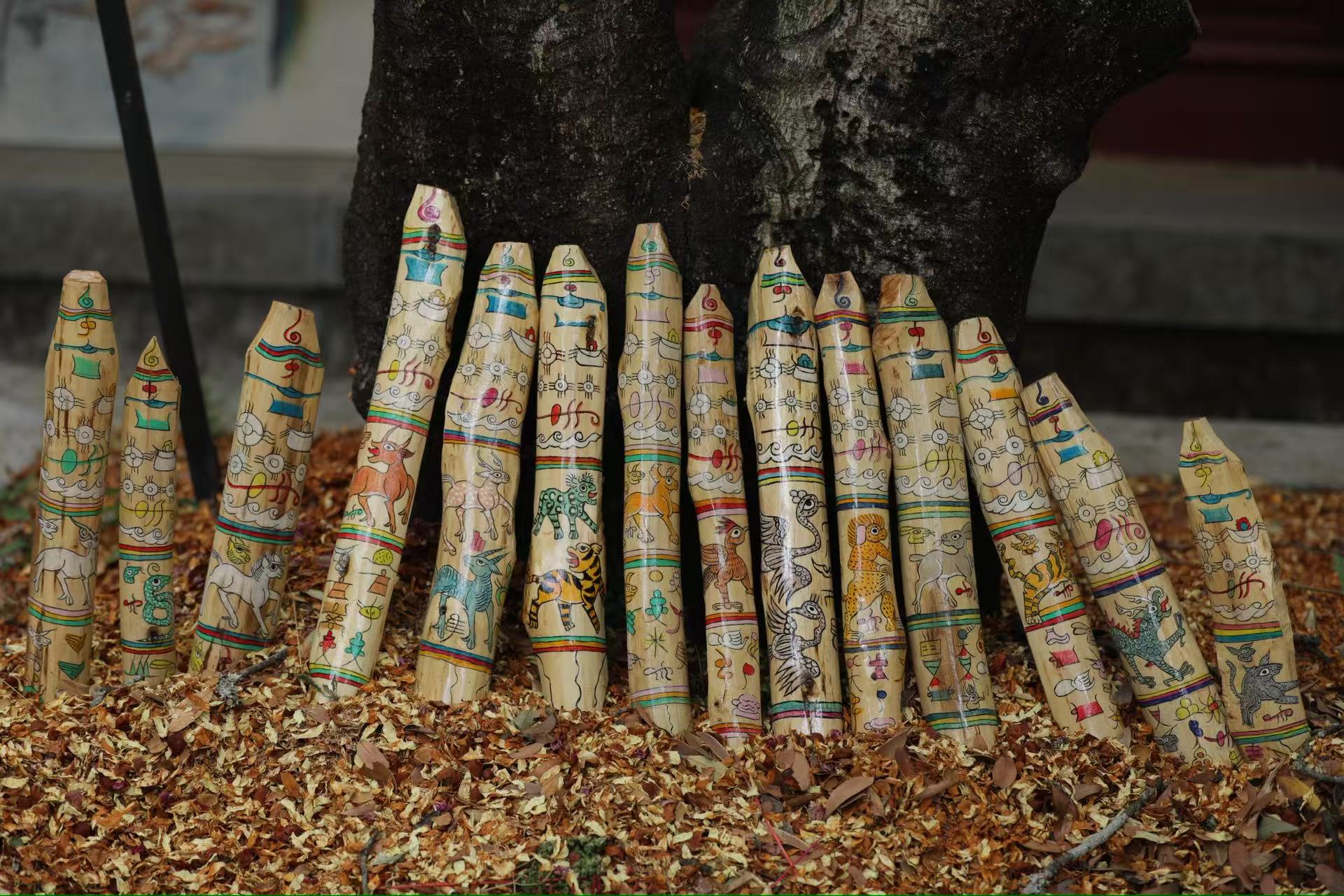
4. Symbolic Philosophy Animistic Connection: Trees embody "Shv" — nature spirits that govern mountains, forests, and water. Dongba Cosmology: Wood acts as a bridge linking the Three Rea...

High in the Himalayas, where Yunnan’s misty mountains cradle ancient villages, the Naxi people have woven a cultural fabric unlike any other. At its heart lies Dongba culture—a living, breathing ta...
We'd love to hear from you
If you have any questions, please fill in this contact form, and our team will reach you back as soon as possible.
Leave a comment
This site is protected by hCaptcha and the hCaptcha Privacy Policy and Terms of Service apply.